
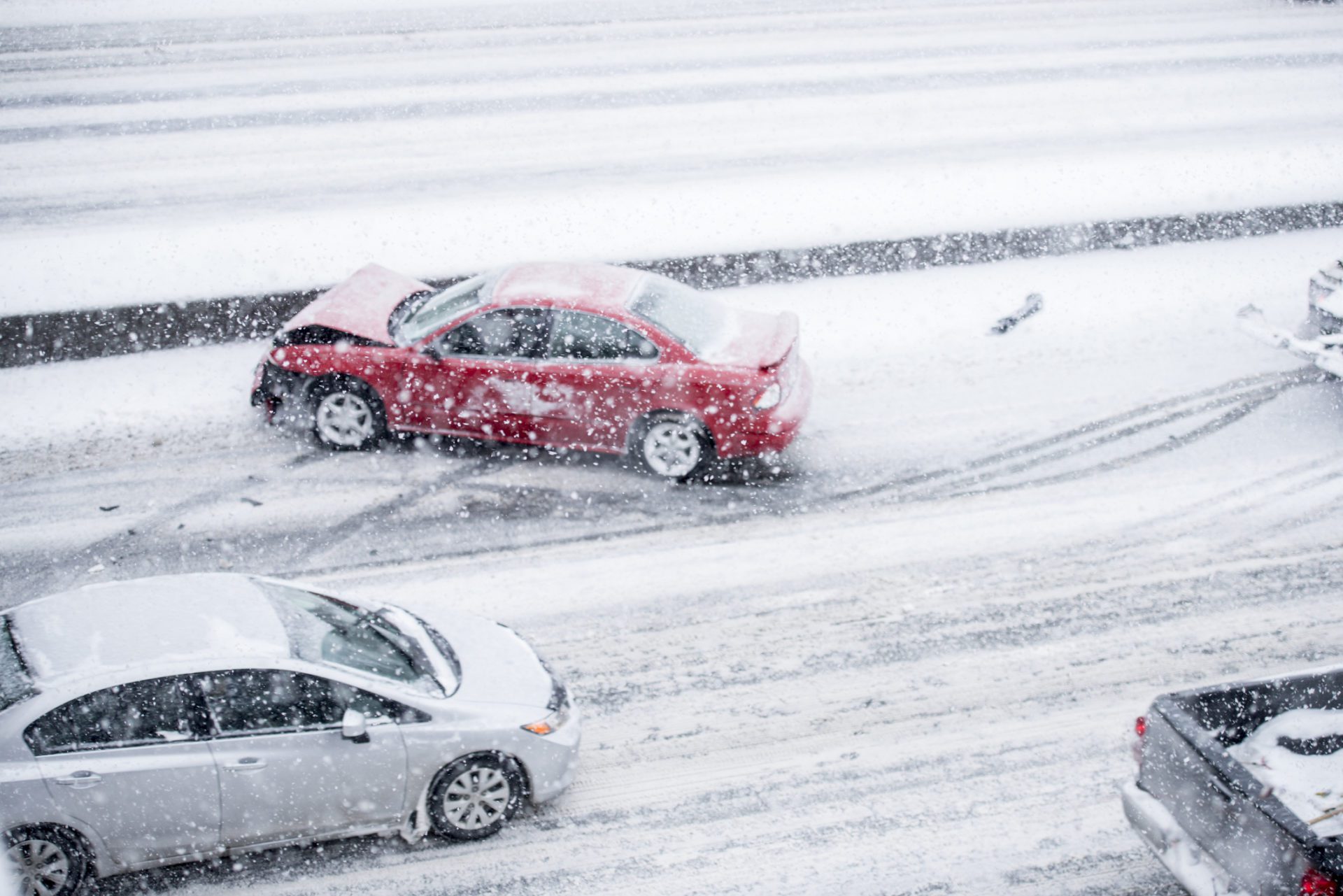

When winter weather turns dangerous, the correct reaction in the first 1–3 seconds determines whether the driver:
- regains control safely
- slides into another lane
- spins out
- ends up in a ditch
- collides with another vehicle
New drivers often panic because they don’t understand car physics, traction, or the correct response.
This section breaks down every major winter emergency, with step-by-step instructions.
5.1. EMERGENCY: THE CAR BEGINS TO SLIDE ON ICE (LOSS OF TRACTION)
This is the MOST common winter emergency for new drivers.
Cause:
- Driving too fast for conditions
- Turning too sharply
- Hitting a patch of black ice
- Braking too hard
- Accelerating while turning
What NOT to do (but teens usually do):
- Slam the brakes
- Yank the steering wheel
- Panic turn
- Accelerate suddenly
- Close their eyes or freeze up
These reactions make the slide drastically worse.
Correct Response (SKID RECOVERY):
STEP 1 — Stay calm and DO NOT brake hard.
Hard braking locks tires → zero control.
STEP 2 — Ease off the gas.
This helps the tires regain grip.
STEP 3 — Look where you WANT the car to go.
The car follows your eyes — this is a proven driving principle.
STEP 4 — Steer gently in the direction of the slide.
Example:
Rear of the car slides right → gently steer right.
STEP 5 — When traction returns, straighten the wheel.
Overcorrecting can cause a second skid.
Instructor Tip:
Youth Driving Schools teaches skid correction using the “Light Hands, Light Feet” rule:
- Light hands = gentle steering
- Light feet = gentle gas/brake
Heavy inputs cause loss of control.
5.2. EMERGENCY: YOU HIT BLACK ICE AND LOSE ALL CONTROL
Black ice is invisible. It forms overnight, in shade, on bridges, and during temperature drops.
Immediate Signs of Black Ice:
- Steering suddenly feels light
- The car won’t turn
- Brakes feel ineffective
- Road looks wet but tires make no sound
- Traction control light flashes
What You MUST do:
- Do NOT brake.
Braking = instant spin. - Keep wheels straight.
Turning increases skid risk. - Gently ease off the accelerator.
- Stay calm — the ice patch is usually short.
- Regain traction before making any movement.
If you must slow down:
Tap brakes very lightly, but only after traction returns.
5.3. EMERGENCY: THE CAR WON’T STOP (BRAKING FAILURE ON ICE)
This happens most often:
- downhill
- approaching an intersection
- in rush-hour traffic
- near stop signs
- at traffic lights
Correct Response:
- Take your foot off the gas immediately.
- Pump the brakes softly (if NO ABS).
- If you HAVE ABS → press firmly and hold.
- Downshift to a lower gear if possible (vehicles with manual mode).
- Steer toward an “escape path”:
- shoulder
- snowbank (better than hitting a car)
- empty lane
Snowbanks = SAFE STOPPING ZONES
Many instructors purposely teach students to pick a safe snowbank instead of hitting another vehicle.
5.4. EMERGENCY: THE CAR STARTS FISHTAILING
This is when the rear of the vehicle swings left-right unpredictably.
Common causes:
- Too much speed
- Accelerating on ice
- Braking on ice
- Turning too sharply
- Sudden steering
Correct Response:
- Ease off the gas (immediately).
- Steer INTO the direction the rear is sliding.
- Avoid braking unless absolutely necessary.
- Straighten the wheel AS traction returns.
- Do NOT overcorrect.
Fishtailing happens fast — but recovery is easier than most drivers think if they stay calm.
5.5. EMERGENCY: YOU GET STUCK IN SNOW
This is extremely common for beginners.
What NOT to do:
- Don’t floor the gas (digging deeper).
- Don’t spin tires for more than 3–5 seconds.
- Don’t rock the car violently.
Correct Response:
Step 1 — Clear snow around all four tires.
Shovel or use hands/ice scraper.
Step 2 — Turn traction control OFF temporarily.
This allows controlled wheel spin to help escape.
Step 3 — Use the “Rocking Method” GENTLY.
Shift between:
- Drive → Reverse → Drive
Gently tap the gas while rocking.
Step 4 — Use sand, salt, kitty litter, or car mats under the tires.
This increases grip instantly.
Step 5 — Re-enable traction control once free.
5.6. EMERGENCY: YOU CAN’T SEE ANYTHING (WHITEOUT OR HEAVY SNOW)
New drivers panic when visibility drops to zero.
Correct Response:
- Slow down gradually — don’t brake suddenly.
- Turn on LOW BEAMS (never high beams in snow).
- Turn on fog lights if you have them.
- Increase following distance to 10+ seconds.
- Use right-side lane line as a guide.
- Avoid passing or lane changes.
- If visibility reaches zero → pull over safely.
- Turn on hazard lights only when parked.
5.7. EMERGENCY: YOU’RE STRANDED ON THE ROAD IN A SNOWSTORM
This can happen from:
- engine failure
- being stuck
- spin-out
- road closures
- running out of fuel
Never leave the vehicle in a blizzard.
Most winter fatalities occur when drivers walk away from the car.
Correct Response:
- Stay inside the vehicle.
- Run the engine 10 minutes per hour.
- Crack a window for ventilation.
- Clear snow from exhaust pipe (CO2 risk).
- Turn on hazard lights.
- Use blankets, coats, emergency warmers.
- Stay visible and conserve battery/heat.
A prepared winter emergency kit can save lives.
5.8. EMERGENCY: CAR SLIDES ON A BRIDGE OR OVERPASS
Bridges freeze first, even when roads look clear.
Correct response is identical to black ice:
- no braking
- no turning
- no acceleration
- stay straight
- slow down gently
- regain traction
5.9. EMERGENCY: STEERING LOCKS UP IN FREEZING CONDITIONS
Power steering fluid can thicken in extreme cold.
If steering becomes heavy:
- Slow down
- Do not turn sharply
- Pull over soon
- Let car warm fully
